
Meet "Agent 13"
Was this forgotten monster the biggest traitor in American history?

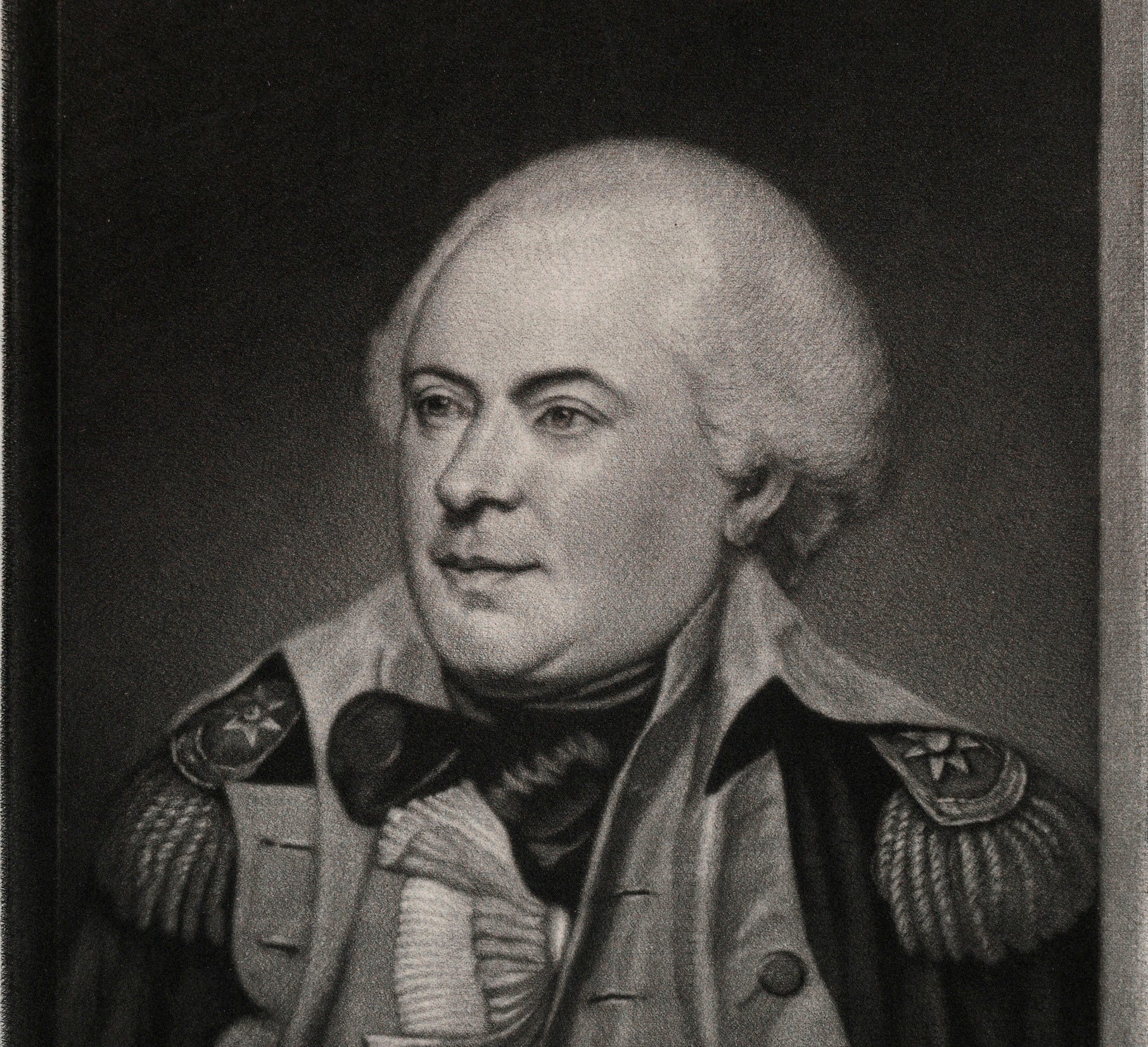
I want to share a spy story with you. A story about a man who was one of the biggest traitors in American history––possibly the biggest: James “Wilkie” Wilkinson, onetime commanding general of the United States Army.
His code name: Agent 13. His mission: destroy this nation as it trusted him with leading its defense. It’s an outrageous tale that we in the United States largely decided to forget.
I stumbled on his story after more than fifteen years of covering the military, the intelligence world, and politics as a journalist. I couldn’t believe how relevant it is to today. It could be ripped from the headlines of our modern world. This saga involves greed, war, corruption, politicians putting party above country, insurgencies, nationalist tensions, geopolitics, and, above all, espionage. It shows that throughout its existence, the United States has faced deadly-serious threats from prominent Americans working for, or with, foreign powers to undo this democracy. This is why this tale is so compelling. It’s timeless, showing that we, in America, have faced remarkably similar challenges time and again since our nation’s birth.
This post is the first in a series where I’ll try to tell Agent 13’s story––or, at least, part of it.
Introduction: Coffee, Silver, and a Murder
It’s a November night on the southern edge of the American Midwest. The United States is at war. Water on the region’s lakes and rivers often raises a curtain of fog into the late fall air––useful for hiding from the military patrols scouring the region. Here, in a boat moored near the confluence of the Mississippi and Ohio rivers, foreign smugglers transfer three barrels of coffee beans onto a smaller craft. Hidden inside these mundane-looking barrels is a fortune in silver being shipped to an unimaginably well-placed spy––one working on behalf of a major world power to dismember the United States of America. This shipment is compensation for his treachery. While most of the boat’s crew are unaware of the true nature of their cargo, an American messenger on board, entrusted with overseeing the delivery, is deeply nervous. If they’re caught, the clandestine payload threatens to doom him, the spy he serves, and their plans to carve up this nation at war.
A foreign military officer is also accompanying them. Experienced in espionage, he senses that the plan is too dangerous to work. He tries to cancel the remainder of the voyage and tells the smugglers that he will be returning home instead of continuing on. But the American messenger stands to make too much money for delivering the cargo. He and the boatmen finish loading it onto the smaller boat for a trip hundreds of miles up the Ohio River to Cincinnati, where the spy waits.
Within days, the messenger is dead, murdered by the four crew of the smaller vessel––perhaps as he struggled to keep them from accessing the treasure inside the barrels. The smugglers take the money and try to disappear into rural America, only to arouse suspicion wherever they go thanks to their extremely limited English and the unusually large amount of cash they’re carrying. The spy and his many co-conspirators are now in incredible danger. Four foreign criminals are roaming the countryside, sticking out like sore thumbs and carrying evidence that could help prove longstanding rumors that the spy, a very senior official in the U.S. government, is on the payroll of a foreign power bent on dismantling the United States.
Luck and cunning on the spy’s part intervene.
Three of the cash-laden murderers are caught and taken before a federal judge in Kentucky who happens to be involved in the spy’s conspiracy. The judge immediately informs his traitorous friend that he has custody of the boat’s crew before transferring them out of state to a military facility controlled by the spy.
Once in possession of the smugglers, the spy has them shuttled between a series of additional military bases in order to limit their exposure to suspecting Army officers. When one local commander becomes curious about the prisoners being moved through his small post, he finds that he has no one on hand who speaks the captives’ language and sends for a translator to aid in their interrogation. Yet the translator who arrives, like the judge in Kentucky, is also involved in the conspiracy. He simply omits from his translation any references to the plot that the prisoners make under questioning. Nevertheless, the local commander remains suspicious and returns the three boatmen to Kentucky. There, they are again received by the turncoat judge who has them quietly deported to their home country, where at least one of them is reportedly executed. The spy and his conspiracy are safe. His treachery will continue for years to come.
This quick saga marked just one of countless times that our spy relied on a combination of wit, corruption, and luck to dodge justice and keep the United States in mortal peril.
He was a sociopath whose lifelong pursuit of foreign treasure almost doomed America.
Maj. Gen. James “Wilkie” Wilkinson commanded the U.S. Army for nearly 15 years during one of the most vital, and fraught, times in United States history, all while working as a spy for the Spanish Empire with the assigned task of smashing the U.S. to pieces––and gaining wealth and power by doing so.
He was an associate of national legends like George Washington, Thomas Jefferson, John Adams, and Alexander Hamilton. He was also a friend to some of the most notorious villains in American history, such as Benedict Arnold and Aaron Burr. His misdeeds were an open secret during his day, known to his fellow Army officers and even Washington himself. His life intersected with the birth of, and even shaped, American political issues that we’re still wrestling with today. His life also intersected with a remarkably deep cast of personalities who would play major roles in American history for a full century: he served as a young officer under Washington and, as a general himself, Wilkinson led a young lieutenant, Winfield Scott, who would one day command the Union Army during the Civil War. Yet, aside from niche circles, his tale has been largely swept under the rug. Perhaps it was too complex and inconvenient for mass audiences.
Wilkinson spoke of democracy, and the workaday people it protects and empowers, using the same disdainful rhetoric as today’s dictators and aspiring dictators. He was disgusted by the ideals that his country aspired to. He relished the idea of being king.
His treachery was also motivated by the same things that drive so many modern traitors: narcissism and financial need. He seemed to hold an emptiness in his soul, and was desperate to fill it with a sense of superiority gained from luxury and the conquest of others. These character factors were exploited by America’s rivals, just as they are today, who sought to recruit prominent Americans into their plans to destroy this country not with outside military force, but from within. They wanted to use differences among the American populace and politicians’ lust for power and money to ruin this nation.
It’s highly likely that the fragile, fledgling United States wouldn’t have survived if this man had succeeded in his plans to break it into pieces. At the very least, his schemes would have hobbled the United States’ prospects for growing into the global power it would become. And it’s entirely possible that he would have succeeded if it weren’t, oftentimes, for luck.
Terrifyingly, no one in power appeared to be able to fully halt him. He faced no fewer than three courts martial and four congressional investigations, only to emerge from each victorious and relatively unscathed. Many failed to stop him because he was useful to them. Even heavyweights like George Washington were mixed on him––often helping him despite knowing the rumors of his being a foreign spy and only checking his misdeeds when they became too wild to ignore.
In spite of our desire to see such evildoers punished, either by our own justice or by what may seem to be fate or karma, this wasn’t to be the case for Wilkinson. He never fully achieved his goals but he also didn’t die in poverty or prison. His plans were tripped up by twists of luck and by lay people whose small actions stymied him just enough to save this country. He was never able to escape the insecurities that drove his scheming. He died in material comfort while chasing more plots abroad, a pitiful creature far from home, haunted by demons that led him to a life of constant fraud and malice.
Stay tuned for more.